Showing posts with label Gate 2013. Show all posts

Thursday, 8 January 2015

Early Christian Architecture

Describe the Architecture of early Christian Basilica churches?

Early Christian Basilica Churches:

  1. Usually created over the burial place of saint.
  2. Approach through an atrium or open forecourt surrounded by arcades.
  3. Next came the covered narthex, between atrium and churches.
  4. Narthex opened into the nave.
  5. Nave lighted by a clear storey of small windows
  6. Aisle on either side of nave, 1/2 width of nave.
  7. Occasionally, 2 aisles on each side of nave.
  8. Galleries for women sometimes over aisle.
  9. Beams- Initial form of medieval transept that caters corrected the plan into a cross.  
  10. A choir was enclosed by low screen walls or CHANEL and provided with a pulpit on either side.
  11. Vista rounded of by apse, where the bishop took central place.
  12. Altar, in front of apse, placed over burial place of saint for celebration of Christian sages.
  13. A CIBORIUM or TABERNACLE created on columns over the altar.
  14. Apse was semi-domed.
  15. Closely spaced columns carrying Entablature seperated nave from aisles.OR Widely spaced columns carrying semicircular arcades seperated name from aisles.
  16. Churches appear longer than they actually are: 
                    Long perspective of columns that carries the eye along to the sanctuary.
17. Timber roofs covered the nave side aisles occasionally vaulted.
18. Aisles covered by timber roofs.
19. Comparatively low height of interiors.
20. Walls still constructed according to Roman methods and using hand-laid rubble concrete faced with brick or stone and something plaster.


Tuesday, 6 January 2015

Landscape Architecture

Important Terminology of Landscape Architecture

Aedicule-

An opening ( door, window or shrine etc.) framed by columns or pilasters and topped by an entablature and pediment. Such an opening is said to be aediculated. 
 

Bailey-

The walls surrounding a keep or a courtyard enclosed by fortified walls.
Baroque-
Early period of Georgian Architecture, know as the age of elegance. Blenheim palace is the major example of grand, highly decorative style. 

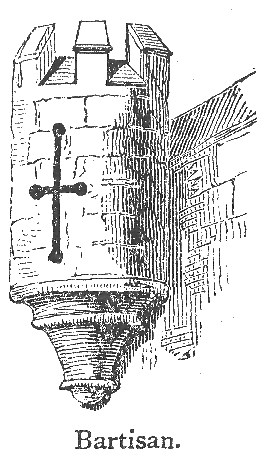
Bartisan-

A bartisan (or bartizan) is an unroofed turret projecting from the top of a castle wall. (A bartisan which is roofed is generally known as a tourelle.)

Oriel-

A bay window that projects from an upper storey.

Belvedere-

A turret, lantern or room built at high level to provide a view.

Breastsummer-

 A large lintel spanning a wide opening (supporting brickwork masonry) often over a shop or bay window, formally of timber now concrete or steel.

Cant-

An external angle of a building that is not a right angle e.g. a cant bay window

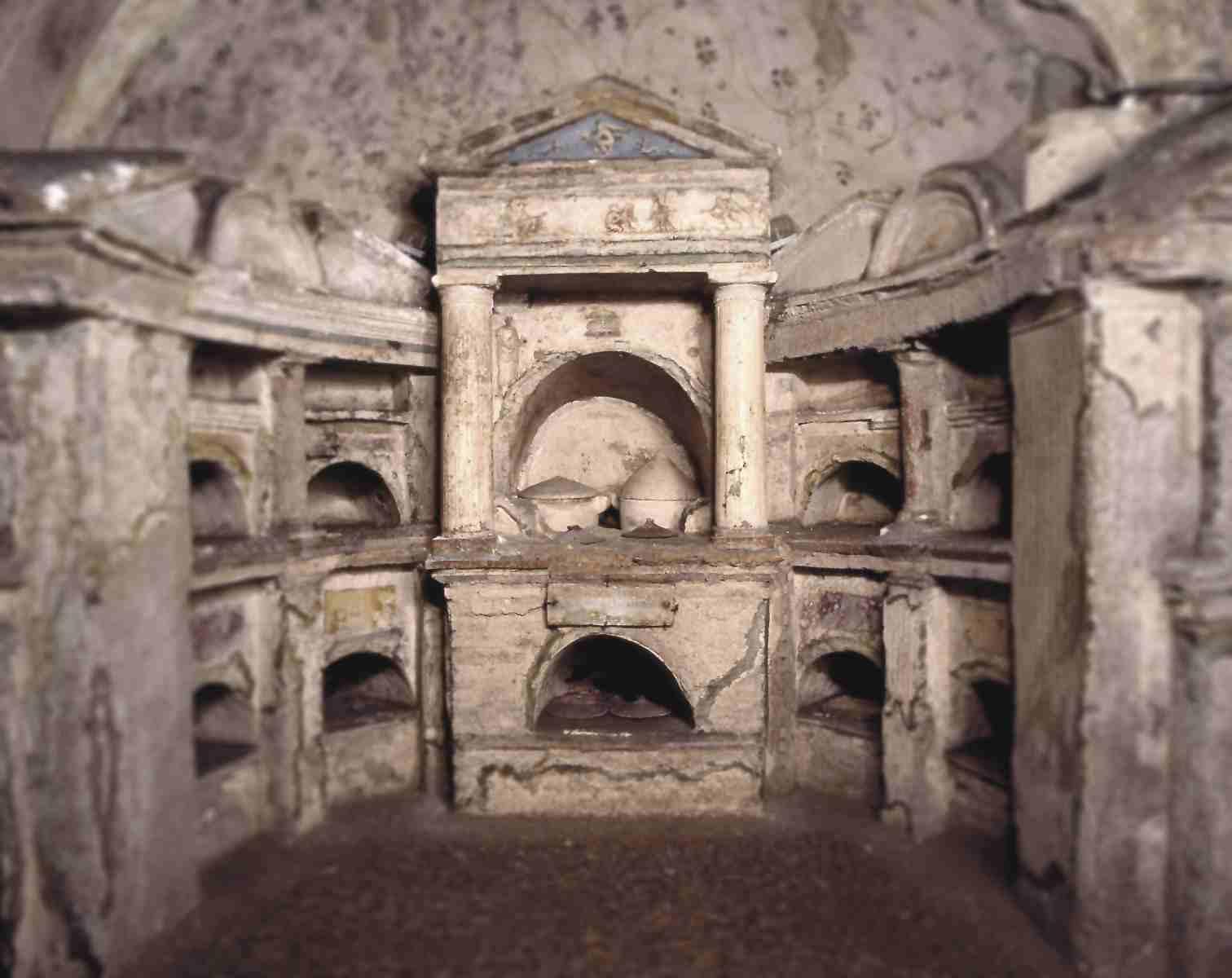
Catacomb-

An underground room or place used for storing the dead.

Chandry-

A place used for storing candles.
Chippendale-  
A Georgian furniture Designer.

Cob Wall-

A wall constructed from layers of pressed mud, gravel and straw.

Florentine Arch-

An arch where the intrudes and exturdes are not parallel.

Mastaba-

Mastaba previously built with floor and wall lining of limestone later totally built of limestone.
 

Serdab- 

An enclosed room with a slot the head of a statue of deceased contained within.

Stele-

An upright stone slab in the offering room with inscription of the name of deseased.
- Pyramids evolved from Mastaba- step pyramid of limestone from Tura, also granite. 


Monday, 29 December 2014

HOW TO CRACK GATE WITHOUT COACHING

The gate exam is vital for all the Architecture students to continue their higher studies. All the students go to coaching classes to prepare for gate. This makes the student invest their money more and spending lots of time for preparation. The question asked in the gate exam is what they study in architecture. The preparation for GATE can be done by their own without coaching. The students should know the concepts clearly. It is an important step to make preparation to clear GATE without coaching . In the second and third year of engineering, make clear of all the concepts. Students get the clarity about the concepts by teaching it to someone. If this is not possible, then they can revise the textbook again.

The next step to clear GATE 2015 without coaching is to collect the books and materials that are needed for GATE exam. This step takes 6 months. The previous ye are collected which are in chapter wise. It is important for gate preparation. The solved questions are available through online for all the fields of engineering such as electrical, mechanical, electronics, computer science and instrumentation, etc. The refreshing of subjects is important for GATE 2015. The textbooks which are in printed form or ebooks can be collected on all the subject with the syllabus of the gate. Then collect the sample papers needed for gate exam.

Friday, 14 November 2014

Technical Terms and Definations

  • Alteration: A change in usage of building or a structural change, such as an addition to the area or height, or the removal of a part of a building, or any change to the structure, such as the construction of, cutting into or removal of any wall, partition, column, beam, floor joist or other support, or a change to or closing of any required means of ingress or egress or a change to the fixtures or equipment.
  • Balcony: A horizontal cantilevered projection including a hand-rail or balustrade to serve as passage or sitting out place.
  • Barsati: Habitable room/rooms on the roof of building below or partly below ground level.
  • Basement or Cellar: The lower storey of a building below or partly below ground level.
  • Building Height:
(i) In case of flat roofs- the vertical distance measured from the average level of the center line of the adjoining street to the highest point of the building adjacent to the street wall.
(ii) In case of pitched roofs: the vertical distance measured from the average level of the center line of the adjoining street to the point where the external surface of the outer wall intersect the finished surface of the sloping roof.
(iii) In case of gable end of sloped roof facing the road- the vertical distance measured from the average level of the center line of the adjoining street to the mid-point between the eaves level and the ridge.
  • Building Line: The line upto which the plinth of a building adjoining a street or extension of a street or on a future street may lawfully extend.
  • Cabin: A room constructed with non-load bearing partition/partitions with adequate provision of light and ventilation.
  • Chajja or Sunshade: A sloping or horizontal structural overhang usually provided over opening on external walls for protection from the sun and rain.
  • Courtyard: A space permanently open to the sky, enclosed fully or partially by building and may be at ground level or any other level within or adjacent to a building.
  • Covered Area: Ground area covered by the building immediately above the plinth level. It does not include the spaces covered by, canopy, chajja, canopy or alike projections; uncovered staircase, compound, chajja, canopy or alike projections; uncovered staircase, compound wall, gate, well, tank, fountain, uncovered swimming pool, garden, etc.
  • Damp Proof Course: A course consisting of some appropriate water proofing material provided to prevent penetration of dampness or moisture.
  • Drain: A line of pipes including all fittings and equipment such as manholes, inspection chambers, traps, gullies and floor traps used for the drainage of a building, or a number of buildings. Drain shall also include open channels used of surface water.
  • Drainage: The removal of any liquid (storm water, waste water, sewage etc.) by a system constructed purpose.
  • Exit: A passage, channel or means of egress from any building, storey or floor area to a street or other open space of surface water.
  • External Wall: An outer wall of a building not being a party wall even though adjoining to a wall of another building and also means a wall abutting on an interior open space of any building.
  • Fire Lift: One of the lifts specially designed for use by fire service personnel in the event of fire.
  • Fire Proof Door: A door or shutter fitted to a wall opening, and constructed and erected with the requirement to check the transmission of heat and fire for a specified period.
  • Floor: The lower surface in a storey on which one normally walks in a building. The general term, floor, unless otherwise specifically mentioned, shall not refer to a mezzanine floor.

Sunday, 26 October 2014

Monuments and Sculptures in Tamil Naidu

Monuments and sculptures in Tamil Nadu


Brihadeeswara Temple - Tanjavur

Gangaikonda - cholapuram


Darasuram temple


Mamallapuram


Madhurai Menakshi amman temple


Varadaraja temple - Kanchi


Rameswaram temple


Thiruvallur statue - Kanyakumari


Rockfort - Trichy


Shri Bhaktha Anjaneyar - Dindugal


Golden Temple - Siripuram, Vellore


Thursday, 23 October 2014

Aims and objectives of town planning

The main objectives of the town planning may be summarized in three words viz. Health,
Convenience and Beauty
1. Health :
  • To create and promote healthy conditions and environments for all the people – rich and poor, to live, to work, to play or relax.
  • To make right use of the land for the right purpose by proper division of land called zoning such as residential, commercial industrial, institutional and recreational etc.
2. Convenience :
  • The object of convenience is meant in the form of various needs of the community such as social, economic, cultural and recreational amenities etc. Public amenities required for the proper upkeep of the citizens include water supply, sanitation, electricity, post, telegraph, gas etc., proper sites for industrial, commercial, business enterprises to encourage them in trade with cheap power, transport services, drainage etc.
  • Recreational amenities include open spaces, parks, gardens and playgrounds, for children and town halls stadiums, community centers, cinema houses, and theaters for adults.